Walk right into any type of serious home kitchen area and you'll discover a couple of tools that punch over their weight. A good scale. A sharp cook's blade. And, increasingly, a lotion whipper with a sleeve of steel cartridges. Laughing gas cream chargers have actually ended up being a staple for chefs that like precision and speed. They placed glossy swirls of Chantilly on a tart in seconds, aerate batters for featherlight waffles, and let you instill vodka with jalapeño without waiting over night. The performance is real. So is the inquisitiveness, and often the worry: are these tiny metal canisters risk-free to make use of at home?
Short solution: yes, with respect for the physics and the gas. Like a stress stove or a deep fryer, the device itself isn't dangerous when you recognize what it does and you comply with some fundamental policies. The longer answer has subtlety, and it deserves reviewing if you desire uniformity, flavor, and tranquility of mind.
What precisely remains in a cream charger?
A common cream charger is a small steel cartridge secured with a slim dome at one end. Inside is nitrous oxide, abbreviated N2O. In food solution, you'll listen to a couple of compatible names: cream chargers, whipped cream chargers, N2O cream chargers, Laughing gas cream chargers. They all describe the exact same thing.
Each cartridge typically consists of 8 grams of N2O. Business kitchen areas sometimes use larger 16 gram or 24 gram versions, and there are 580 gram cylinders for high-volume service, however the math remains the exact same: you are using gas to create stress and dissolve in liquid cream. N2O has 2 critical qualities that make it perfect for whipped lotion. First, it liquifies conveniently in fat and water, then expands as it leaves solution, creating bubbles and quantity. Second, it has a moderate restraint result on germs and slows down oxidative off-flavors in lotion, which helps with storage stability.
Nitrous oxide is not combustible. That surprises individuals that perplex it with butane lighters. It will not spark or explode under regular food preparation conditions. It is, nevertheless, a compressed gas. In a secured canister, stress can surpass 50 bar depending on temperature level. That stress is why you should treat both the whipped cream dispenser and the chargers as severe equipment.
How a whipped cream dispenser works, and where the risks are
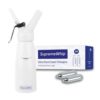
The dispenser itself is basic: a metal container ranked for stress, a head with a gasket, a valve and lever, and an owner where you puncture the charger. You gather cool cream, sugar, and flavorings. You screw in the charger. The pin penetrates the cartridge's aluminum foil. The gas rushes in, liquifies into the cream, and pressurizes the bottle. Shake to disperse. Dispense upside-down, and the valve launches cream while the gas increases through the nozzle, creating a steady foam.
Risks focus in 3 zones:
1) Stress and temperature level. If you overfill the bottle, usage way too many chargers, or let the bottle heat up, pressure increases past the risk-free ranking. Over-pressurization plus heat can warp components or blow a gasket. Cheap dispensers with thin walls, weaker threads, or low-grade shutoffs are much more vulnerable.

2) Mechanical fit. A damaged or nicked head, an endangered O-ring, or a dissimilar charger holder can trigger leakages. An abrupt jet of chilly gas can shed skin, and an extreme leakage can send out parts flying.
3) Gas exposure. Laughing gas displaces oxygen. A couple of seconds of exposure in a kitchen with typical air flow is not a wellness situation. Long term inhalation, intentional or unintentional, is dangerous. It can trigger hypoxia and, with duplicated misuse, neurological harm through vitamin B12 inactivation.
Notably missing from that listing is "poisonous deposits in cream." Food-grade N2O is inert for culinary functions and does not make cream harmful. If your lotion tastes metallic, the offender is usually rancid fat, aroma contamination from bad storage, or oil in the dispenser head, not the gas.
Choosing equipment that deserves your trust
I have actually worked in cooking areas where a dispenser sits on the line for six hours, cycling every few mins. The difference in between trustworthy performance and white-knuckle unpredictability frequently comes down to the hardware. If you're a home cook, get devices that establishes a standard for security rather than wishing your strategy compensates.
Material matters. Search for containers and heads made from stainless-steel or thick-walled aluminum from a reliable brand name. Stainless withstands dings and holds strings better after years of usage. A lot of disastrous failures you become aware of originated from counterfeit or off-spec dispensers with slim necks or brittle cast heads. Real manufacturers release stress ratings and have serial numbers or stamps on the body.
Gaskets and shutoffs are the peaceful heroes. A fresh silicone O-ring seated in a tidy groove seals constantly. A used gasket gives you that whispering hiss that becomes frostbite on your fingers if you overlook it. Valves should operate efficiently with a company spring return and a tight nozzle.
Chargers themselves seem similar, yet high quality differs. Food-grade chargers are cleaned and loaded to a resistance, and they utilize a clean puncturing surface area that lowers steel particulate. Some low-priced imports contain traces of lubes or have inconsistent fill weights. That turns up as sputter, disparity, or off-odors. If the battery charger brand name you purchased leaves a pale chemical note in delicate whipped cream, change brand names. You'll taste the difference right away in unflavored cream.
Technique that maintains you on the risk-free side
Control is the theme. Beginning with cold components and devices. Nitrous oxide liquifies more readily in cold cream. Cold fluid additionally maintains stress foreseeable and foam steady. If your dispenser head is warm from the dishwasher, run it under cool water before putting together. Aim for lotion in the 34 to 40 F range.
Fill lines exist for a reason. The majority of one-pint dispensers hold concerning 500 milliliters of fluid. Overfilling leaves no headspace for gas to liquify and pressurize evenly. You'll get hostile jets, crying foam, or a stuck valve. Leave a couple fingers of air at the top.
One charger per half-pint, 2 for a pint, and three for a quart-sized dispenser is a sensible guideline for typical whipping. The lure to "include another for stiffness" is how gaskets blow. If your foam does not have structure, work on your lotion's fat percent or your sugar proportion prior to you include much more gas. Heavy cream in the 36 to 40 percent fat array whips accurately. Light cream under 30 percent has a hard time no matter just how much N2O you toss at it.
Shake purposely, not strongly. 5 to 8 firm trembles, with the dispenser held flat, typically does it. Over-shaking breaks bubbles and presses liquid out of the foam. You'll see watery drips and touches on the plate if you go too far. If that occurs, lay the dispenser level in the refrigerator for 10 mins to allow the foam reset.
Dispense upside-down. Gravity maintains the fluid at the valve, and the gas remains above it. If you hold the container upright and press the bar, you'll spray gas first, squandering stress and cooling down the shutoff enough to frost it shut.
Let the dispenser work at its own pace. If you push hard and fast to compel a thick stream, you'll tear the foam and remove excessive gas in one go. A gentle pull yields much better structure and fewer messes.
Storage and service life, without guesswork
Freshly billed lotion in a clean dispenser keeps its framework for 24 to 72 hours in the refrigerator, depending upon active ingredients and temperature swings. Sugar maintains foam. A bit of mascarpone or lotion cheese folded in supports it a lot more. Citrus juice can weaken structure, as can alcohol beyond a couple tbsps per pint.
Rinse the nozzle between usages and clean the valve. The area where cream fulfills air is where perishing starts. If you find crusted lotion on the nozzle or scent anything sour, empty the dispenser, clean it, and start fresh. Never ever release stress by directing the dispenser into a sink and blasting extremely. Hold a towel over the nozzle and press carefully. When vacant, loosen the head gradually and evenly.
If you store a billed dispenser on its side, the gas and liquid keep far better contact and give a lot more consistently the next day. Standing upright permits gas to pool at the top and can make the first squeeze a sputter of gas. After a day or 2, offer 2 mild shakes to redistribute.
Cleaning that really protects against problems
Dishwashers are seductive, yet warm drying out cycles warp gaskets and anneal plastic tips. Break your dispenser down by hand. Get rid of the nozzle, the spring, the shutoff, the O-ring, and any type of filters or mesh plates. Wash each get rid of cozy soapy water, rinse, and let them air dry independently. Evaluate the O-ring. If it's gummy, fractured, or flattened on one side, change it. Keep a tiny stock of extra O-rings and valve springtimes with the battery chargers. They set you back little and prevent half the issues that appear like "mystery leakages."
A few drops of neutral alcohol on a paper towel help remove any kind of residual fragrance from the head. Cinnamon oil, coffee, and curry cling tenaciously to plastic ideas. Usage devoted ideas for wonderful and savory if you make use of the dispenser for both.
What regarding non-cream uses: nitro mixtures and foams
The pastry station doesn't have the cream whipper. N2O liquifies in water-based mixes as well, which opens up smart techniques. You can make a natural herb foam for a pea soup, set a yuzu cloud atop a tartare, or whip a dairy-free coconut cream. This is where individuals push limits and where safety and security flubs often slip in.
Alcohol mixtures are the traditional instance. Laughing gas pressures ethanol and water right into plant cells promptly. A jalapeño tequila that usually takes hours can taste intense and environment-friendly in five mins. Do not exaggerate the cost. For a one-pint dispenser, one battery charger is plenty. Extra chargers increase pressure, extract cruelty, and push warm solvent out the shutoff when you vent.
Pressure cycling issues. For mixtures, cost, drink gently for 30 seconds, then let the container rest upright for a minute so foam subsides. Vent gradually, with the nozzle pointed right into a towel. Pressure right away. https://medium.com/@meluneblef/whip-it-right-tips-for-using-cream-chargers-safely-7ccbf4889ccd If you try to preserve pressure for hours to "draw more flavor," you are saving a pressurized alcohol bomb in the fridge. That's requesting trouble.
Hot foams need unique care. Nitrous oxide's solubility changes with temperature level, and plastic flaws when warm. Unless your dispenser and suggestions are clearly ranked for hot applications, do not pack them with cozy fluids. The safe course is to flower gelatin in your base, chill it till it is simply above setup, cost, and maintain it in the fridge. If you absolutely want hot foam, make use of a stainless dispenser rated for it and hold it in a bain-marie listed below 165 F. Greater temperatures increase pressure and can jeopardize plastic threads.
Addressing the big fears directly
Exploding cylinders. Real cream chargers do not take off under typical use. The failure points we see in occurrence reports entail counterfeit or harmed dispensers, not the cartridges. Chargers are created to air vent instead of tear catastrophically if overheated. Still, do not store them in the stove drawer or near a variety where radiant heat can cook them.
Toxic gas. Food-grade nitrous oxide does not poisonous substance your lotion. It dissipates as you dispense. The gas is odor free and unappetizing in the final product at regular degrees. If your whipped cream tastes odd, take a look at your lotion freshness, flavors, or devices cleanliness.
Frostbite and burns. High-pressure gas broadens swiftly and cools steel listed below cold in seconds. If a gasket stops working and you get a plume of cold gas on your hand, it can melt you. Take care of a hissing dispenser with respect. Transform it away from your face. Vent with a towel. If a component ices up, let it thaw naturally. Do not run hot water over a pressurized head.
Misuse and breathing. Leisure inhalation is not safe. Past immediate risks like hypoxia and falls, chronic abuse can deplete vitamin B12, causing severe neurological problems. In a home with young adults or guests, maintain battery chargers in a cupboard, out an open rack. Treat them the way you deal with alcohol or sharp blades: accessible to responsible grownups, not a novelty on display.
Quality control and what to seek in N2O cream chargers
It's affordable to ask what separates a trustworthy battery charger from a suspicious one. You can not reduce them open at the shop, however you can use a couple of cues. Reliable brand names mark set numbers and manufacture days on the cartridges or package. A constant, smooth neck with clean aluminum foil and no oil deposit is a great indication. Weight uniformity matters: an 8 gram charger will evaluate around 28 to 30 grams total, relying on steel thickness. If you weigh numerous and see broad difference, that's a flag.
Taste tests are simple. Bill a percentage of simple heavy cream with one charger. Give onto a plate. Let it sit 30 seconds. Scent and taste. If you capture a solvent-like note or metal tang, switch brand names. The very best whipped cream chargers vanish right into the history, allowing the dairy products and vanilla speak.
Environmental considerations without handwaving
You're making use of single-use steel cartridges. They are recyclable. The technique is to make them certainly safe for the reusing stream. Puncture the invested battery chargers to reveal they are vacant. Several devices do this by design when you remove them, but a distinct opening is better. Collect in a metal bin and drop off with scrap steel or curbside recycling if your town approves little steel things. Don't throw them right into basic garbage if you can avoid it. For heavy users, refillable 580 gram cyndrical tubes with an appropriate regulatory authority lower waste and are cheaper per gram, but they need scrupulous handling and storage.

When to change parts and retire equipment
If you cook on a regular basis, plan on changing the O-ring every 6 months to a year. Change the valve springtime if the lever activity comes to be mushy or the foam sputters in spite of fresh gas and appropriate drinking. Retire a dispenser if the neck strings are noticeably removed, the container has dents near the base, or hairline splits appear in a plastic head. None of those deserve betting on.
A battery charger owner that cross-threads or scratches steel when you tighten it should be replaced. That component takes tension whenever you puncture a battery charger. A fresh owner protects against the micro-leaks that frost your fingers and waste gas.
Real-world situations: where things go right and wrong
A home baker charges a pint of 38 percent cream with 2 chargers, sweetened with 10 percent sugar by weight and a pinch of salt. The dispenser and cream are chilly. They shake 6 times and pipeline rosettes onto a sharp. The rosettes hold for hours in the fridge. Safety and security threat: negligible. Why it works: appropriate fat material, right fee, cool tools, minimal manipulation.
A breakfast host decides to offer maple-whipped lotion with waffles. They leave the loaded dispenser on the counter near the array for 2 hours while cooking bacon. The head obtains cozy. First squeeze at the table is an aggressive blast, after that the valve sputters and freezes. The nozzle crusts. Security danger: modest. Finest solution: maintain the dispenser in the refrigerator between uses, wipe and rinse the nozzle when switching over training courses, and avoid heat exposure.
An enthusiast infuses gin with coffee beans. They bill two times "for even more flavor," after that fail to remember the dispenser in the refrigerator overnight. A visitor locates it and hits the bar. The electrical outlet sprays an extreme stream of alcohol and gas. The cooking area smells like a bar in seconds. Safety and security risk: greater due to stress and volatile fluid. Better method: one charger, five-minute rest, sluggish vent into a towel, after that strain and shop in a bottle.
Simple guidelines that keep you safe and happy
- Keep whatever cool unless your dispenser is ranked for heat, and also then, remain below 165 F. Respect the fill line and common cost counts: one for half-pint, 2 for pint, 3 for quart. Clean thoroughly, air-dry parts, and replace O-rings regularly. Vent slowly with a towel, factor away from individuals, and never ever force a stuck valve. Buy credible devices and food-grade chargers, and reuse the empties.
The bottom line for home kitchens
N2O cream chargers are as secure as the person utilizing them. The technology is easy and robust. The gas is suited to the work. Minority genuine hazards originate from ignoring stress, warmth, and upkeep, or from purchasing bargain-bin equipment that cuts edges where it matters. If you treat your whipped cream dispenser like the severe device it is, it rewards you with regular appearance, quicker service, and the capability to pull off treats and mouthwatering foams that resemble dining establishment plating without a brigade behind you.
I have actually viewed brand-new chefs fall for the initial clean bow of flawlessly whipped lotion from a cool container, after that ruin the second round by shaking it as if they were mixing paint. I've additionally seen a nine-year-old pipeline delicious chocolate mousse onto profiteroles like a professional because the dispenser removes the arm exercise and orders method. Safety and security doesn't suggest timidity. It suggests knowing the resistances and working comfortably inside them.
So of course, laughing gas cream chargers belong in a home cooking area. Select audio equipment. Learn the rhythm. Maintain it cool. Respect the gas. That's the whole playbook, and it delivers every time.